
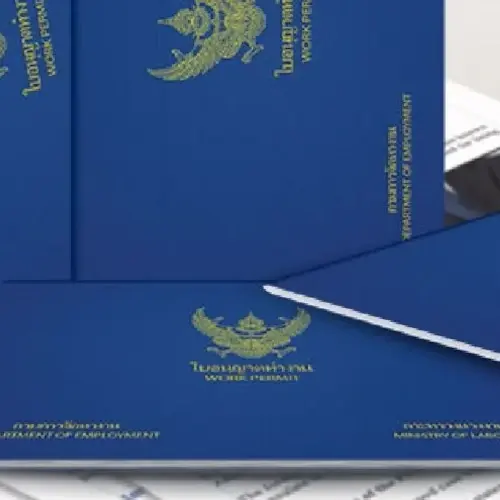

A work permit is essential for foreigners wishing to work legally in Thailand. It allows non-Thai citizens to work in skilled professions or even manage businesses. Working in Thailand without a valid work permit can lead to serious consequences, including fines and potential imprisonment for those caught working without authorization.
Work Permit Eligibility and Business Requirements
The success of a work permit application largely depends on the company’s registered capital. For Thai businesses, at least two million baht in fully paid-up capital is generally required for each foreign employee. However, if the foreign worker is married to a Thai citizen, the capital requirement is reduced to one million baht. Foreign-owned companies that have been operating in Thailand can apply for work permits by bringing in at least three million baht per employee.
Most companies are capped at ten work permits, but businesses endorsed by Thailand’s Board of Investment (BOI) can receive special privileges, including exemptions from these capital requirements and enhanced options for hiring foreign specialists for BOI-approved projects.
Step 1: Securing a Non-Immigrant Visa
Before applying for a Thai work permit, you must first obtain a non-immigrant visa. This visa is crucial for the work permit process and should ideally be acquired before arriving in Thailand. Our firm can assist in securing this visa in your home country or nearby. Additionally, if you’re already in Thailand, we can help convert a tourist visa to a non-immigrant visa.
Requirements for a Non-Immigrant Visa Outside Thailand:
- The applicant must have a job offer or have started a Thai company to employ themselves.
- The employer must formally request a non-immigrant visa for the applicant to initiate the work permit application.
- The company must vouch for the applicant’s good character, cultural respect, and adherence to Thai laws.
The visa should be applied for within 30 days of your planned departure to Thailand. The consular office may require copies of the company’s registration documents and financial statements as part of the application.
More details about Work Visa at the Thai Ministry of Foreign Affairs
Step 2: Applying for the Thai Work Permit
After securing a non-immigrant visa, the work permit application can proceed. Documentation requirements are extensive, and include:
Employee-Provided Documents:
- Passport – Copies of each page, signed by the employee.
- Non-Immigrant Visa
- Departure Card (TM.6)
- Education Degree – Signed copies (may need embassy certification).
- Transcript – Signed copies.
- Professional Certificates or Licenses – Signed copies (if applicable).
- Resume/CV – Detailed description of previous positions, responsibilities, performance, and locations.
- Photos – Three 5×6 cm photos (not standard passport photos) showing a full face in business attire. Must have been taken within six months of the application.
- Marriage Certificate – If married to a Thai citizen, provide original and signed copies, including the spouse’s Thai ID, children’s birth certificates, and household registration.
Note: Thai authorities may request these documents be certified by your embassy, which involves authentication fees and possibly translation into Thai.
Employer-Provided Documents:
- Commercial Registration Department Certificate – Confirms the organization’s registration and includes details of directors, business objectives, and registered capital.
- Shareholders List – Certified by the Commercial Registration Department.
- Factory License – If applicable, issued by the Ministry of Industry.
- VAT Certificate (Phor Phor 20) – Validates VAT registration.
- VAT Filings (Phor Phor 30)
- Withholding Tax Filings (Phor Ngor Dor 1)
- Social Security Filings
Each document must bear the company’s official seal, with the managing director’s or authorized representative’s signature next to it. Additionally, government officials may require that documents such as registration or shareholder lists be issued within the past 90 days.
Note: Thai labor laws stipulate a minimum of four full-time Thai employees per foreign worker.
Approval Process for the Work Permit
Work permits are granted based on specific criteria, including the foreign worker’s unique skills and how they align with the job description. The Labor Ministry may limit the number of work permits issued, depending on how the applicant’s expertise supports Thailand’s workforce needs. Our experienced team can assist companies in improving their chances of securing work permits for foreign employees.
After submission, it’s essential to keep your non-immigrant visa valid, as the permit approval process can link to visa details in the Labor Department system. The processing time for companies with a capital of two million baht is typically seven business days in Bangkok, but it can take up to two months in Phuket. BOI-promoted companies benefit from fast-track approval, sometimes as quickly as three hours at the One Stop Service Center.
Receiving Your Thai Work Permit
Once approved, the applicant must appear at the Labor Department with their passport to sign and receive their work permit book. The Department will stamp the back of the passport at the time of issuance.
Work Permit Restrictions and Conditions
A work permit allows employment strictly within the specified company and location. If an employee is transferred to a different branch or begins working for a new employer, they must apply for a new permit. Additionally, if employment ends, the work permit must be surrendered to the Labor Department within ten days.
Step 3: Obtaining a Tax ID
Employers assist their foreign employees in applying for a Tax ID number with the Thai Revenue Department, which will be used for all tax-related documents.
Step 4: Applying for a Re-Entry Permit
It’s crucial to distinguish between a visa extension and a re-entry permit. While a visa allows one to stay in Thailand for the designated period, a re-entry permit lets the person leave and return without invalidating their visa and work permit. Exiting Thailand without a re-entry permit will cancel the visa and work permit.
A multiple re-entry permit offers greater flexibility, allowing unlimited trips outside Thailand, while a single re-entry permit is limited to one use.
Step 5: Renewing Your Visa and Work Permit
To continue working in Thailand, you must renew both the visa and the work permit. If holding a multiple-entry visa, you will need to leave Thailand every 90 days. If this exit is missed, reapplying for a new visa will be necessary.
90-Day Reporting: Foreigners staying long-term must report to the Immigration Office every 90 days. For those with multiple-entry visas, the requirement is met by leaving and re-entering Thailand every 90 days. Our firm offers services to assist with the 90-day reporting requirement on a yearly package basis.
0 Comments